Blog
The Story Behind One of the World’s Most Luxurious Handmade Arts


What Makes Tabriz Rugs So Valuable?
The Story Behind One of the World’s Most Luxurious Handmade Arts
When people think about luxury, they usually imagine Swiss watches, rare cars, or fine jewelry.
But among collectors, interior designers, and art lovers, another masterpiece quietly holds its place at the top: the handmade Tabriz rug.
Not just a carpet.
Not simply home decoration.
A real Tabriz rug is a piece of living art — handmade by masters, carrying centuries of culture, patience, and craftsmanship inside every knot.
Today, authentic Tabriz rugs are found in luxury villas, royal-inspired interiors, designer penthouses, and private collections around the world. But what exactly makes them so valuable?
In this guide, we’ll explore why Tabriz Persian rugs are considered among the finest handmade carpets on Earth.
The History of Tabriz Rugs
Tabriz, one of the oldest carpet-weaving cities in Iran, has been a center of Persian rug artistry for centuries. Located along the historic Silk Road, the city became a meeting point for art, culture, and trade.
Master weavers in Tabriz developed techniques and designs that would later influence the entire Persian carpet industry.
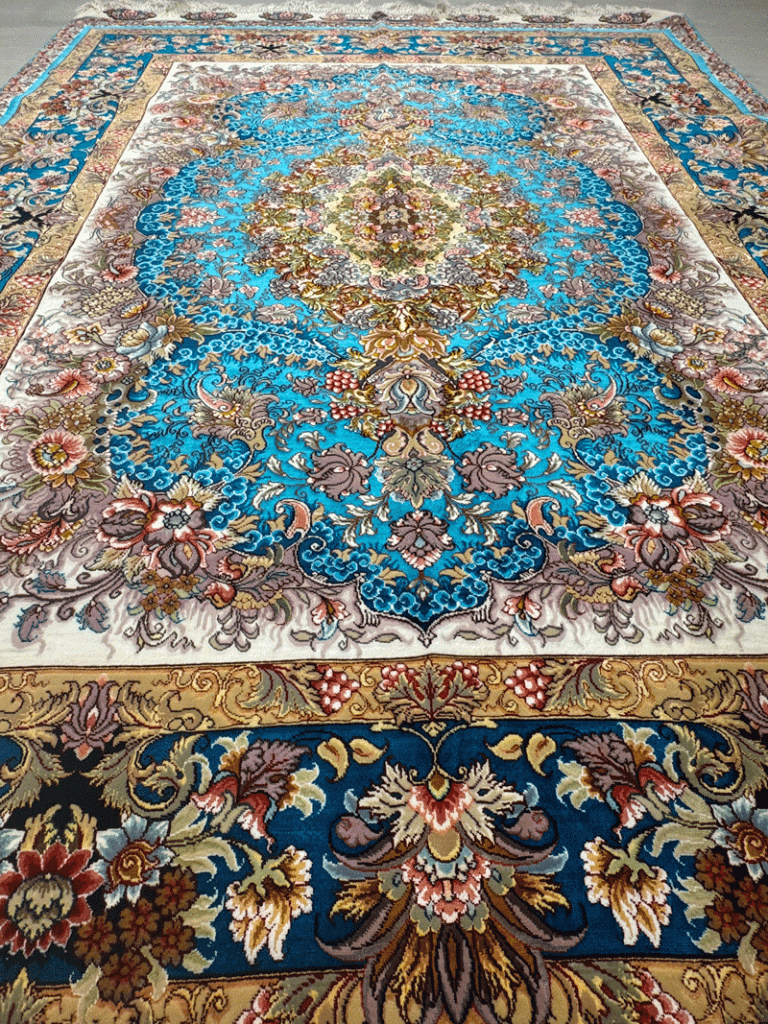
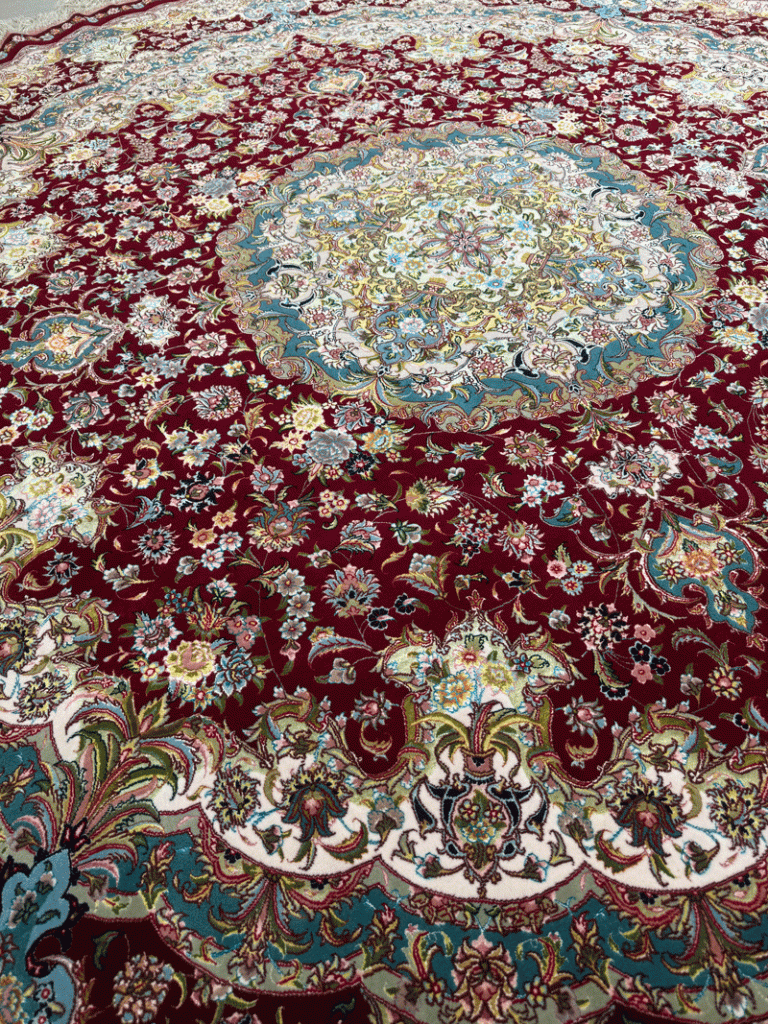
Unlike mass-produced rugs, every authentic Tabriz rug tells a different story. Some feature floral gardens, some depict hunting scenes, while others resemble detailed paintings created entirely with silk and wool.
This long artistic heritage is one of the biggest reasons collectors value Tabriz carpets so highly.
Handmade Craftsmanship That Cannot Be Replaced
One of the main reasons Tabriz rugs are expensive is simple:
They are handmade.
Creating a fine Persian rug can take months or even years. Skilled artisans tie thousands — sometimes millions — of knots entirely by hand.
In high-quality Tabriz rugs, every line, curve, and detail is carefully woven with incredible precision.
Machine-made rugs may imitate patterns, but they cannot reproduce:
- the depth,
- the texture,
- the soul,
- or the artistic imperfections
that make handmade Persian rugs unique.
This human craftsmanship is becoming increasingly rare in today’s industrial world, which makes authentic handmade carpets even more valuable over time.
Why No Two Tabriz Rugs Are Ever the Same
Luxury today is no longer about owning what everyone else has.
Real luxury means exclusivity.
That is exactly why wealthy collectors and luxury interior designers love Tabriz rugs. Many handmade Persian rugs are completely unique, meaning there may never be another identical piece in the world.
Especially in Persian tableau rugs and master-designed carpets, the weaving process becomes closer to painting than manufacturing.
Every small variation in color, knot tension, and artistic interpretation creates individuality — something impossible for factories to duplicate.
Owning a one-of-a-kind Tabriz rug feels closer to owning a painting than owning a carpet.
The Materials Used in Luxury Tabriz Rugs
The finest Tabriz carpets are made using premium natural materials such as:
- high-quality wool,
- natural dyes,
- and pure silk.
Silk Tabriz rugs are especially admired for their extraordinary detail and shine. Under light, the colors shift softly, giving the rug a living appearance.
Natural dyes also age beautifully over time, unlike synthetic colors that fade harshly.
This combination of natural materials and handmade weaving allows quality Persian rugs to last for generations.
In many families, Persian rugs become heirlooms passed from parents to children.
Why Interior Designers Love Tabriz Rugs
Modern luxury interiors often feel cold and minimal.
A handmade Persian rug adds warmth, depth, and character that modern furniture alone cannot create.
That’s why luxury interior designers frequently use Tabriz rugs in:
- modern penthouses,
- luxury hotels,
- classic villas,
- and contemporary homes.
The contrast between modern architecture and centuries-old craftsmanship creates a powerful visual balance.
A well-chosen Tabriz rug can completely transform a room from ordinary into unforgettable.
Are Tabriz Rugs a Good Investment?
Many collectors believe high-quality Persian rugs are not just decoration — they are long-term art investments.
Why?
Because:
- handmade production is limited,
- master weavers are becoming rarer,
- and authentic antique rugs become harder to find every year.
While trends change constantly in furniture and decoration, Persian rugs have remained desirable for centuries.
Rare handmade Tabriz carpets often maintain value far better than mass-produced luxury items.
For serious collectors, the best Persian rugs are considered timeless assets.
How to Identify an Authentic Tabriz Rug
Because of the global demand for Persian rugs, many imitations exist on the market.
Here are a few signs of a genuine handmade Tabriz rug:
1. Irregularities in the Design
Small imperfections usually indicate handmade work.
2. Natural Material Feel
Authentic rugs use wool and silk with rich texture and softness.
3. Detailed Backside
The back of a handmade rug clearly shows individual knots.
4. High Knot Density
Fine Tabriz rugs are known for extremely detailed weaving.
5. Unique Artistic Character
Real Persian rugs feel artistic rather than factory-perfect.
The Emotional Value of Persian Rugs
Perhaps the greatest value of a Tabriz rug is emotional.
A handmade rug carries:
- the time of its maker,
- generations of tradition,
- and the identity of Persian artistry.
In a world filled with disposable products, handmade Persian rugs represent permanence.
They are created slowly.
They age beautifully.
And they often outlive the people who buy them.
That is why authentic Tabriz rugs continue to fascinate collectors, designers, and luxury homeowners across the world.
Final Thoughts
A true Tabriz rug is far more than a decorative object.
It is:
- art,
- heritage,
- craftsmanship,
- investment,
- and individuality woven together by hand.
As modern luxury moves toward authenticity and uniqueness, handmade Persian rugs are becoming more desirable than ever.
Because real value is silent.